

How Many Makeup Brands Are There In The Us
A brief but telling piece of legislation was put forrad in Connecticut in Jan. Just three lines in length, the nib calls for any cosmetics in the state to "run into the chemical condom standards established by the European Wedlock".
The motion, unlikely to be made law, is the latest signal of mounting anguish over the enfeebled regulation of everyday products in the United states of america compared with European countries. Across a span of cosmetics, including makeup, toothpaste and shampoo, to items ranging from household cleaners to fruit juice to cheese, hundreds of potentially harmful ingredients banned in the European union are legally allowed in the United states of america.
"Many Americans are unaware that they are absorbing untested and dangerous chemicals in their products," said Alex Bergstein, a state senator who put forward the Connecticut legislation. Bergstein was previously the chair of the Mountain Sinai Children'south Ecology health center.
"Generally, the EU has got information technology right. In the Us nosotros have a strong favouritism towards companies and manufacturers, to the extent that public wellness and the environment is beingness harmed. The pendulum has swung in an extreme way and it's really going to take a general enkindling by the public."
The disparity in standards between the European union and U.s.a. has grown to the extent it touches almost every element of well-nigh Americans' lives. In cosmetics alone, the EU has banned or restricted more ane,300 chemicals while the United states has outlawed or curbed simply eleven.
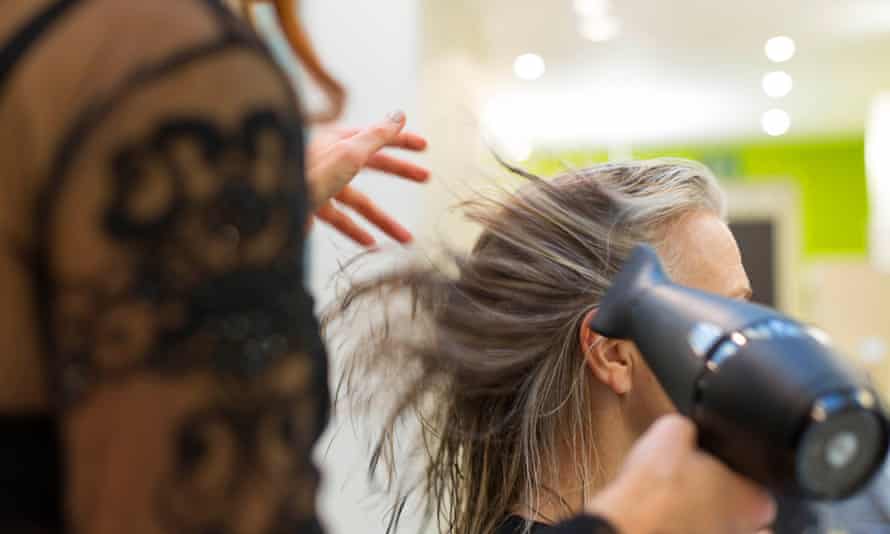
It'south possible to find formaldehyde, a known carcinogen banned in Eu-sold cosmetics, in United states hair-straightening treatments and blast polish. Parabens, linked to reproductive problems, are ruled out in the EU but non the Us, where they lurk in peel and pilus products. Coal tar dyes can be plant in Americans' eyeshadow, years after they were banned in the EU and Canada.
"In the US it's actually a buyer beware situation," said Janet Nudelman, manager of the Entrada for Safe Cosmetics. "Cosmetics companies can use any raw fabric that they like and there's no fashion to know if they are safe before they reach the shelves. The contrast with the EU is stark and troubling."
At the heart of the EU's approach is what as known as its Reach (Registration, Evaluation, Authorisation and Restriction of Chemicals) laws which require manufacturers to prove to regulators that a product is safe before it can be used. The US has like rules for new chemicals entering the market but no such precautionary principles for the thousands of potential toxins already in apply.
This means that certain dyes used in cheese, chocolates and juice are restricted in some European countries such as the UK – where a 2007 study found some artificial colors and preservatives are linked to increased hyperactivity in children – but not the Usa. Atrazine is the about widely used herbicide in the The states just has been banned in Europe since 2003 due to concerns information technology pollutes water. Atomic number 82-based paints were banned in much of Europe before the second world war but it took the US until 1978 to follow accommodate.
Asbestos exposure has long been known to cause deaths and illnesses just the substance is still not banned in the United states of america. The Ecology Protection Bureau (EPA) attempted to do and so in 1989 only to be overturned past the federal court following a backlash from manufacturers.
The clout of powerful industry interests, combined with a regulatory organization that demands a high level of proof of harm before any action is taken, has led to the American public being routinely exposed to chemicals that take been rubbed out of the lives of people in countries such as the UK, Frg and France.
"When the asbestos ban got overturned the EPA got nervous almost banning anything," said Molly Jacobs, a senior researcher at the Lowell Center for Sustainable Product. "That was the last fourth dimension the EPA sought very strict restrictions on industrial chemicals. The European union definitely has stronger policies."
Of the more than 40,000 chemicals on the market in the US, the EPA has only banned six, including polychlorinated biphenyls (known as PCBs) which are linked to cancers, sure aerosol sprays blamed for the hole in the ozone layer and dioxins, used every bit an ingredient in Amanuensis Orange, which the United states sprayed during the Vietnam war.
Under a 1976 police called the Toxic Substances Control Deed (TSCA) the EPA has the ability to limit chemicals, but critics say it is severely flawed. The act largely focuses on new potential toxins and fifty-fifty so gives the EPA merely xc days to work out if new products pose a adventure before they hit the market.
A 2016 amendment known as the Lautenberg Act required the EPA to evaluate all potentially risky chemicals, but progress on this backlog has ofttimes appeared painfully slow. "The EPA is playing catchup, and under this administration things aren't moving very fast at all," said Jacobs.
The EPA recently listed 40 chemicals to be assessed for review, including asbestos, formaldehyde and trichloroethylene, which is used in refrigeration and can cause damage to the nervous arrangement and liver. Andrew Wheeler, administrator of the EPA, said the bureau was committed to the "successful and timely implementation" of the Lautenberg Act.
Q&A Why the Guardian is launching a major reader-funded project on the toxicity of modern life
Testify
Pesticides in your breakfast cereal. Carcinogenic chemicals in your furniture, and contaminated drinking h2o.
Welcome to Toxic America – a Guardian projection which will explore the health implications of living in an environment that can expose all of us to chemical contagion on a daily footing through the air we exhale, the food we eat, the products we use and the water we potable.
The American public is routinely exposed to toxic chemicals that accept long been banned in countries such as the UK, Frg and France.
Of the more than than twoscore,000 chemicals used in consumer products in the Us, according to the EPA, less than ane% take been rigorously tested for human prophylactic. Nether the Trump administration there are signs it'southward only getting worse.
The Guardian is asking our readers to aid us raise $150,000 to increase our coverage of the toxic chemicals in our environment for the rest of 2019.
This series will investigate the ways in which chemicals in our water, food and environs can impair growth, evolution and wellness, causing a toxic fallout that tin include: cognitive and behavioural difficulties, obesity, diabetes, infertility and nascence defects.
We will besides examine the ability of the $640bn chemical industry – which has a lobby that's currently better funded than the NRA.
If we hitting our fundraising goal by thirty June, the half dozen-calendar month project will include dozens of articles, videos, opinion pieces and visual stories over the course of 2019. We promise you lot'll consider making a contribution.
Photo: Guardian Design
Only while the process has lagged, deaths have mounted. More than 50 deaths in the US since the 1980s accept been linked to methylene chloride, a lethal ingredient of paint stripper that has been banned in the EU. The EPA recently got around to banning the chemic from consumer employ after a group of retailers voluntarily removed it from shelves.
Information technology will still be allowed for commercial use, however. "I am deeply disappointed that the EPA has decided to weaken its proposed ban on methylene chloride," said Wendy Hartley, whose 21-yr-old son Kevin died two years agone while using paint stripper on a bathtub, even afterward receiving training and wearing a protective mask. Hartley is 1 of two mothers who are suing the EPA claiming that their sons died while using the paint stripper.
"Workers who use methylene chloride will now be left unprotected and at risk of health issues or death. I will proceed my fight until the EPA does its chore."
But fifty-fifty inside the Trump administration, characterized by its zeal for deregulation, at that place is frustration that regulators have not been able to intervene equally strongly as their European union counterparts. The Food and Drug Administration (FDA) recently found asbestos in Claire's cosmetics only could do footling when the company refused to think the products. Claire'due south subsequently withdrew the eyeshadows and meaty powders voluntarily.
Scott Gottlieb, the departing FDA commissioner, said the episode showed that cosmetics regulations unchanged since 1938 are "outdated" and need to be overhauled to ensure public health.
"To be clear, there are currently no legal requirements for any corrective manufacturer marketing products to American consumers to exam their products for safety," Gottlieb said. "This ways that ultimately a cosmetic manufacturer tin can decide if they'd similar to test their production for safety and register it with the FDA."
In lieu of whatever new laws, consumer advocates want federal agencies to act more aggressively and defy chemical manufacture lobbyists. They concede, however, a more than likely recourse is an upwelling of public outrage at the risks faced in mundanities such as applying makeup or eating tiffin.
"I'm hoping for dramatic changes in our politics merely at that place's piddling chance of that," said Bergstein. "The federal government is barely functioning, so consumers have to realize they have the ability to become more vocal and demand change. The awareness is still not there, though."
-
This article has been updated to correct the appointment of the Lautenberg Human action

How Many Makeup Brands Are There In The Us,
Source: https://www.theguardian.com/us-news/2019/may/22/chemicals-in-cosmetics-us-restricted-eu
Posted by: mccoywaake1974.blogspot.com
0 Response to "How Many Makeup Brands Are There In The Us"
Post a Comment